



Educational Policies Shaping Schools in Nepal
Sajilo Sikshya
2025-12-01
Educational Policies Shaping Schools in Nepal
Education is the backbone of any nation, and in Nepal, the evolution of schools has been profoundly influenced by government policies and reforms. From curriculum design to teacher training to inclusive education, policies have played a key role in shaping the learning environment for children across the country.
Historical Overview of Educational Policies
Over the years, the Nepalese education system has undergone significant transformations. The Education Act of 1971 laid the foundation for structured schooling, focusing on universal primary education. Later, in 1975, the National Education System Plan introduced comprehensive reforms to the previous system, emphasizing vocational education, teacher training, and educational administration.
More recently, policies such as the School Sector Development Plan and the Inclusive Education Policy have been pursued to address issues of accessibility, equity, and quality in education, particularly for the most disadvantaged populations.
Key Policies Impacting Schools
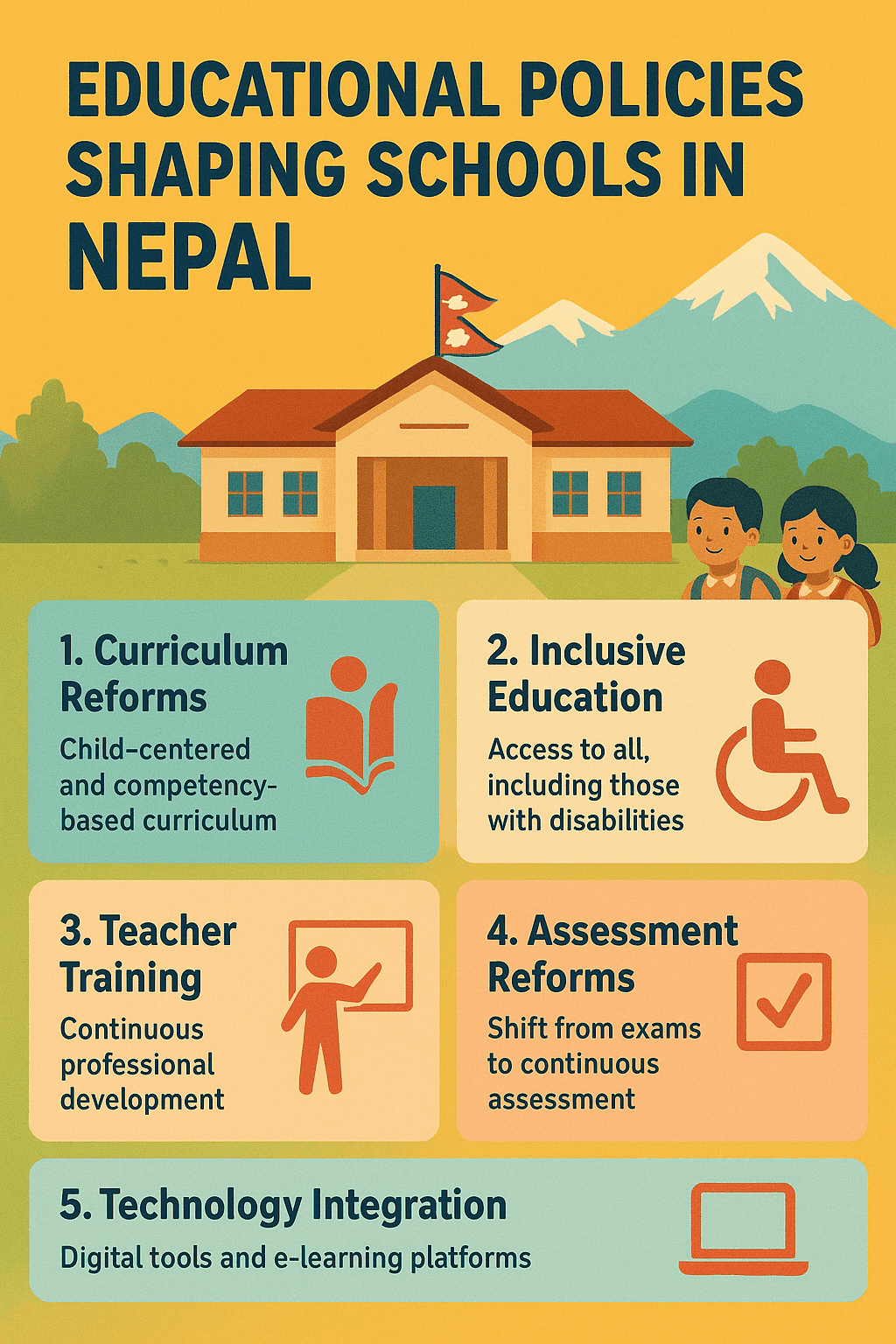
1. Curriculum Reforms
Modern educational policy in Nepal advocates for a child-centered and competency-based curriculum. This shift focuses on developing critical thinking, creativity, and practical skills rather than rote memorization. Schools are encouraged to adopt interactive learning methods that incorporate technology, arts, and co-curricular activities.
2. Inclusive Education
Inclusive Education Policy makes sure that all children, including children with disabilities and those coming from disadvantaged groups, receive quality education. The schools must provide the required resources, training for teachers, and an environment that is conducive to all learners.
3. Teacher Training and Professional Development
Policies therefore underscore the need for continuous teacher training; such programs give importance to modern pedagogical methods, class management, and subject knowledge that will eventually prepare teachers to handle students with different needs.
4. Assessment and Examination Reforms
Nepal's educational policies are gradually moving away from exam-centric models. Continuous assessment practices and holistic evaluation systems that measure a student's overall development, including skills, creativity, and problem-solving abilities, are being promoted.
5. Technology Integration
The use of digital tools and e-learning platforms in teaching and learning is encouraged by the government. In particular, the support of policy for online education during crises such as the COVID-19 pandemic has helped to ensure the continuity of learning.
Challenges in Policy Implementation
While Nepal has progressive educational policies, their implementation at the school level is rather challenging. Limiting infrastructures, a lack of adequate training for teachers, and resource constraints in rural areas often get in the way. Bridging these gaps remains a priority for policymakers and education stakeholders.
The Road Ahead
Nepal has a clear vision for education: equitable, quality education for all. Schools will need to continually revisit policies, invest in teacher development, and embrace innovative teaching approaches to transition into centers of excellence that prepare students academically and as socially responsible, creative, and capable citizens.
Conclusion
More than regulations, education policies are guidelines that shape schools and the future of young Nepali minds. By understanding and adapting to these policies, schools, teachers, and parents can collaboratively work to create a learning environment that fosters every child's potential.